
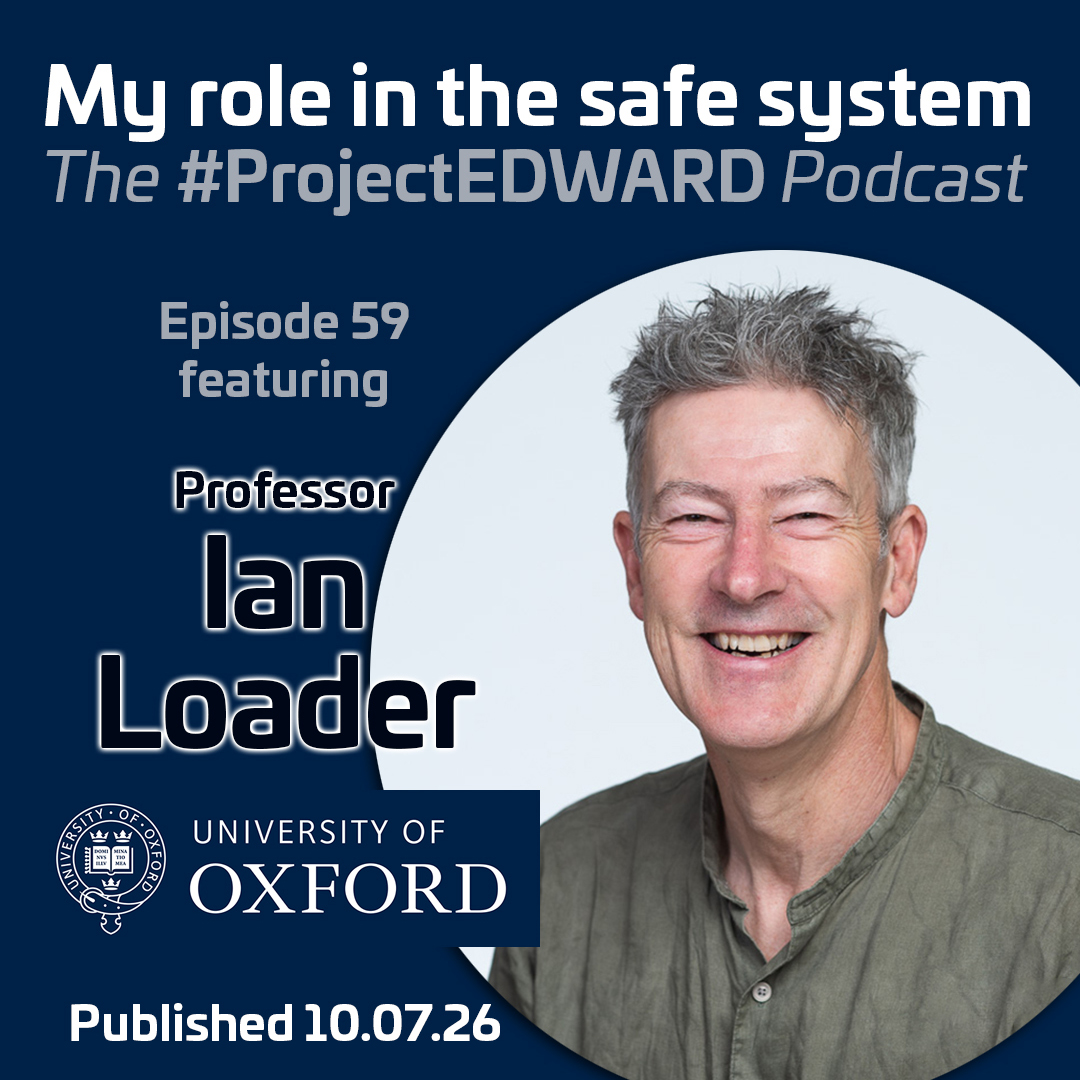
Ian Loader is Professor of Criminology and Professorial Fellow of All Souls College, University of Oxford, and a Fellow of the British Academy.
One of Britain’s most eminent criminologists, his career has spanned policing, penal policy and public attitudes to crime. In recent years he has turned his attention to a radical new question: what does the car tell us about crime, harm, and justice? His Leverhulme Trust Major Research Fellowship, running until 2028, pursues the project ‘Car harms: Automobility and the objects of criminology’, and his landmark paper ‘Beyond Motonormative Punishment’, published in the British Journal of Criminology in 2026, is already reshaping how we think about road safety, law, and regulation
Beyond motonormative punishment: On road safety as environmental regulation
Abstract:
Criminology has a blind spot concerning road safety. The field tends to accept that the problem is best left to technical specialists; treats road safety as separate from its focal concerns with public safety; and reproduces an ideology of streets as distinct socio-juridical spaces. In so doing, criminology leaves unaddressed a significant dimension of the question of how to create safe and liveable urban environments. In this article, I set out to unsettle these distinctions. I begin with a brief historical and geographic sketch of the forms of violence and harm associated with car systems. I then offer a critique of what I term ‘motonormative punishment’—a mix of legal sanctions and a culture of blame that focuses on the individualized responsibility of a minority of ‘careless’ or ‘dangerous’ drivers while accommodating the structural violence generated by regimes of automobility. I argue, instead, for theorizing road safety in terms of diffused responsibility between actors and hybrid actants in a system. It follows, I conclude, that we should radically decentre criminal punishment as a response to road violence in favour of forms of environmental regulation organized around five harm reduction principles: diversion, design, distributed agency, deliberative learning and the disassembly of dangerous actants.
